HVAC Replacement Financing: Options and Tips
A failing air conditioner or aging furnace has a way of picking the worst time to misbehave. When the system wheezes through a heat wave or quits before the first cold snap, the real question becomes how to pay for the fix. HVAC replacement can span a wide range. A straightforward air conditioning replacement for a small home might land in the mid four figures, while a multi-zone heating replacement with upgraded ductwork and air quality accessories can climb well into five figures. Commercial HVAC work that touches rooftop units, controls, and ventilation often adds another layer of cost and coordination. Most homeowners and facility managers do not have that kind of cash sitting idle, which is why financing is such a big part of the conversation between an HVAC contractor and a customer.
This guide maps the financing landscape and shares the practical tips that matter. It pulls from field experience on both residential and commercial jobs, including what actually gets approved, the fine print that trips people up, and the service requirements that protect warranties after the new system is in.
What really drives HVAC replacement cost
Before choosing a financing path, ground the numbers. Replacement pricing is not only about tonnage or BTUs. The load calculation, duct condition, refrigerant line set routing, electrical upgrades, condensate management, and controls integration all influence cost. Air conditioning installation in a tight attic with limited access, for example, can take twice the labor of a garage install. A variable-speed heat pump with a matching air handler, smart thermostat, and a high MERV filter rack has a higher ticket than a single-stage unit. A packaged rooftop for commercial HVAC adds crane time, roof curb work, and often building automation tie-in.
Sometimes repair still wins. An aging condenser that needs a fan motor is a very different decision than a 16-year-old R-22 system with a leaking coil where parts are scarce and refrigerant is expensive. An honest HVAC contractor will lay out both paths. If multiple repairs have stacked up in a short span, especially major ones like a compressor or heat exchanger, replacement financing starts to look like a way to stop the drip and get ahead of the curve.
The common financing paths, in plain language
There are several standard ways people pay for HVAC replacement, each with its own trade-offs. A few are clear wins, a few carry traps, and some are situational.
-
Cash or savings: No interest, no fees, strongest negotiating position on timing and scope. The trade-off is liquidity. Draining reserves for an air conditioning replacement can leave nothing for a roof or car repair.
-
Intro 0 percent credit card offers: Useful if the promotion lasts long enough to pay the balance. Miss a payment or fail to pay in full by the end, and retroactive interest can spike the cost. Confirm the exact promotional rules.
-
Fixed-rate personal loan: Predictable payments and quick funding, often without collateral. Rates depend on credit profile. Look for no prepayment penalty and watch origination fees.
-
Home equity line of credit: Usually lower rates because the home secures the line. Variable rates can rise, and closing can take longer. Make sure the draw period and repayment fit your plan.
-
Contractor-arranged installment loan: Convenient and fast, often with soft credit checks for prequalification. Terms vary. Some plans include dealer fees that the HVAC contractor pays to buy down the rate, which can subtly raise project price.
Those cover the bulk of residential deals. For commercial HVAC, leases and specialized energy programs add more tools.
Reading the fine print that matters
Financing is not just about rate and term. It is about how those two interact with fees, promotional conditions, and your cash flow reality.
APR and fees go together. A loan that advertises a low APR but tacks on a hefty origination fee may cost more than a slightly higher-rate option with no fee. If you plan to pay off early, confirm there is no prepayment penalty. If you plan to stretch payments for predictability, ask how interest accrues and whether the balance can balloon.
Promotional “same as cash” offers deserve scrutiny. Some are true 0 percent with simple monthly payments and no trapdoors. Others are deferred interest, where interest accrues in the background and hits you if you do not pay the full promotional balance by the end date. That surprise often turns a free-looking plan into the most expensive option on the table.
Dealer fee buy-downs get overlooked. Many lenders let an HVAC contractor pay a percentage of the project total to secure a lower customer APR. This can be worth it for longer terms, but that dealer fee has to land somewhere. If the project price is tight, a slightly higher rate without the dealer fee can produce a lower all-in cost. A transparent bid will make that clear.
On-bill financing through utilities or city programs can be attractive because approval standards sometimes weigh payment history with the utility more than credit score, and the payments appear on the monthly bill. Confirm transfer rules if you plan to AC maintenance sell the property. Some programs tie repayment to the meter or the property, not the person.
Incentives, rebates, and tax benefits that pair well with financing
A smart financing plan stacks incentives to shrink what needs financing in the first place. Utility rebates vary widely by region and by equipment efficiency. In some areas you can see a few hundred dollars per system; in others, tiered rebates push into the thousand-dollar range for heat pumps that hit aggressive efficiency targets. Manufacturers occasionally run seasonal rebates as well.
Federal tax credits for certain high-efficiency heat pumps, furnaces, and building envelope improvements can meaningfully improve the numbers. The exact credit and cap depend on the year and the equipment rating. If you are evaluating heating replacement, check whether the specific model qualifies. Documentation matters, so keep the AHRI certificate and the invoice.
Property Assessed Clean Energy, often called PACE, exists in some jurisdictions for residential or commercial properties. It ties repayment to a property assessment rather than a personal loan, and is repaid through property taxes. The structure can preserve personal credit capacity, but it also complicates refinancing or sale. For commercial HVAC, C-PACE can unlock capital for packaged units, VRF, and controls, with terms aligned to the savings horizon.
Stacking works best when the HVAC contractor coordinates the paperwork and schedules the job to meet program deadlines. On the residential side, a mid-summer emergency might not wait for a rebate window. On the commercial side, off-hours staging can make or break a rebate inspection.
What financing looks like for commercial HVAC
Commercial HVAC has its own financial logic. Cash flow predictability usually beats the lowest theoretical interest rate. Operating leases and capital leases spread cost over time and can match the equipment’s service life. Some companies prefer a lease that keeps the asset off balance sheet, others want the depreciation and will opt for a finance agreement that functions more like a purchase.
Section 179 of the federal tax code has allowed many businesses to expense qualifying equipment in the year placed in service, up to a cap that changes over time. It is not a financing tool by itself, but it affects after-tax cost. If a rooftop unit replacement qualifies and the business has enough taxable income, the effective cost drops. A lender who understands HVAC will time funding so installation occurs within the tax year targeted.
Performance contracts and energy service agreements show up in larger facilities. They bundle equipment, controls, maintenance, and sometimes energy supply under one payment tied to measured savings. They require careful measurement and verification to work as advertised. For a small retail building or a restaurant with one or two RTUs, a simple term loan paired with a maintenance plan often aligns better with reality.
On-bill programs for commercial customers sometimes reach higher dollar amounts than residential versions and can include lighting and controls. The upside is ease of payment and potentially softer underwriting. The catch is pace. Utility-administered programs move at the speed of their review cycle, not your broken compressor.
The quiet role of maintenance and warranty in financing
Your payment plan is only as good as the system’s performance over time. Most manufacturer warranties expect proof of regular AC maintenance and heating maintenance. Annual service keeps coil performance up, limits drain clogs, and catches electrical issues before they kill compressors or blow control boards. If a lender ties special terms to proof of maintenance, plan for that too. Keep digital copies of invoices and tune-up reports.
Good maintenance reduces lifetime cost even if no one requires it. A heat pump with a clean outdoor coil and correct refrigerant charge draws fewer amps, runs fewer minutes, and lasts longer. For a financed system, that matters because you are effectively paying for the equipment while the equipment pays you back in comfort and efficiency. Skipping service and drifting into a surprise heating repair on a December weekend is the expensive way to learn the same lesson.
How Southern HVAC LLC frames repair vs. Replacement
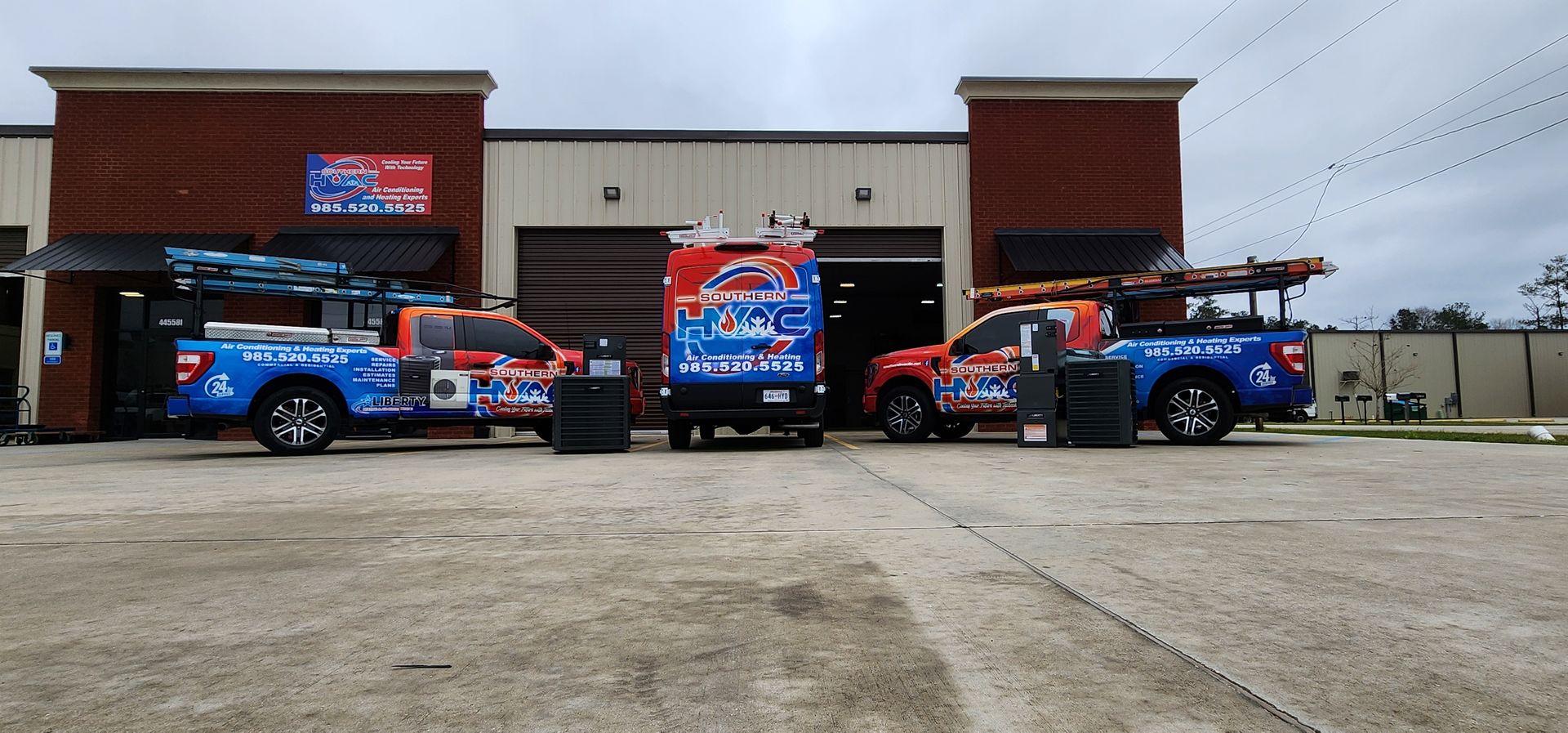
When a homeowner or facility manager calls Southern HVAC LLC for AC repair or heating repair, the first visit is not a sales pitch. It starts with a diagnostic and a short list of realistic options. If a blower motor and a capacitor restore a five-year-old system to stable operation, we say so and we do the work. If we find a cracked heat exchanger or a compressor that has scored itself to death, we price the repair, price the replacement, and show the numbers side by side, including operating costs.
The team runs a proper load calculation for air conditioning installation or heating installation, particularly when the home has changed. New windows, attic insulation, or an addition all shift the target. Right-sizing affects not just comfort but also financing. A smaller, correctly sized heat pump with a high HSPF rating can reduce both the upfront ticket and the monthly utility spend. For commercial HVAC, we review how a space is actually used. A retail bay that never turns on the lights until 10 a.m. Needs different scheduling and ventilation than a bakery that fires ovens at 4 a.m. Building that into the controls is a design choice and a cost control tool.
We also talk about timing. If a customer can nurse a system through two weeks of mild weather, the installation schedule opens up, and lenders typically process applications faster when they are not drowning in a heat wave. If the system is dead in August, speed matters more than squeezing every last rebate dollar. That is a judgment call, not a formula.
What financing through Southern HVAC LLC usually looks like
For customers who want help arranging payment, Southern HVAC LLC works with established lenders that specialize in home improvement. Prequalification often uses a soft credit check, with multiple term options visible in minutes. Funding typically lands the same day or within 48 hours after approval, and job scheduling follows immediately. On the commercial side, we coordinate with lenders who understand equipment schedules, progress payments, and verification photos for rooftop units.
Promotional terms come and go. We explain them plainly, including whether a dealer fee is involved and how it affects project price. Some households prefer a slightly higher APR with no fee because they plan to prepay within a year after a tax refund or a bonus. Others want the lowest monthly payment possible for budget certainty. There is no one best answer, only what matches the customer’s cash flow and risk tolerance.
If you are gathering your paperwork for an application, this short list covers what lenders most often request:
- Government-issued ID and Social Security number
- Recent pay stub or income verification, or for a business, recent financials
- Mortgage or rent amount and housing history
- Project scope and contractor estimate
- For commercial projects, entity documents and signatory authority
Not every lender asks for all of that, but having it ready keeps things moving.
Improving approval odds and lowering lifetime cost
Small moves can tilt a financing decision your way and shave real money off the total paid. A credit score north of the mid-600s opens more doors and better terms. If your score is close, paying down a credit card below 30 percent utilization can lift it within a month. Pull your own credit report, fix obvious errors, and avoid opening multiple new lines before applying for an HVAC loan.
Co-borrowers help. A two-income household with a clean payment history often clears limits that one income cannot. For commercial HVAC, a strong landlord-tenant agreement that spells out who pays for equipment can de-risk a lender’s view of a project, especially in small retail and office spaces.
Design choices matter too. A variable-speed system saves energy and improves comfort, but it costs more. If the budget is tight and financing terms are longer, a high-efficiency two-stage unit can hit 85 to 90 percent of the comfort gain for less upfront. On the other hand, in areas with high electricity rates, the more efficient heat pump may pay back the delta in three to five years, well within a common loan term. Your HVAC contractor should model that with local energy prices. They should also check ductwork. Spending a small amount to seal and balance ducts can let you downsize the equipment half a ton, which lowers both the purchase price and monthly utility bills.
Maintenance plans reduce surprises. Pairing a new system with a heating service and AC maintenance plan that includes seasonal tune-ups, priority scheduling, and discounts on parts creates a predictable operating profile. Lenders like predictability, and you will like fewer 9 p.m. Service calls.
A real-world example from the field
A restaurant with two aging 10-ton rooftop units faced rising AC repair bills every summer. One compressor had failed twice in three years, and the kitchen staff had started to bring in portable fans. The owner wanted stability more than peak efficiency, and cash flow was tight after a slow winter. We proposed a like-for-like heating replacement and cooling upgrade with demand-controlled ventilation and a simple programmable schedule to match opening hours. Financing came through a five-year equipment lease structured with seasonal payment flexibility, higher in summer when revenue is stronger and lower in January. The utility offered a rebate for the ventilation controls, and the owner’s accountant confirmed the ability to expense part of the project that year under current rules. The fan noise dropped, the dining room held temperature at noon, and the monthly spend stabilized. There was no glamour to it, just sensible alignment of equipment, schedule, and financing.
When repair still makes more sense
Not every failing unit should be replaced immediately. If your air conditioner is eight years old, has a known issue like a start capacitor or a contactor pitting out, and the coil is clean, an AC repair can buy three to five more years. If a furnace has a dirty flame sensor and a tired igniter but a sound heat exchanger, heating repair is a reasonable path. Financing makes the most sense when multiple risk factors stack up at once: age beyond 12 to 15 years for many systems, poor maintenance history, rising utility bills, and expensive refrigerant leaks. If only one of those is true, spend the few hundred dollars now, schedule regular service, and revisit replacement when it pencils out.
The application timeline that keeps stress down
The pace of a financing decision often dictates the installation calendar. A smooth path looks like this. You call for diagnostic service and get a clear estimate that includes repair and replacement options. If you choose replacement, you settle on an equipment package and we run the load calculation. Prequalification for financing takes minutes. If you like the terms, you complete the application the same day. Approval usually follows quickly, and funding authorizes scheduling. We order equipment, confirm any rebate paperwork, and set the installation date. For commercial HVAC, we also confirm crane availability and building access windows. While you wait, make the space installation ready. Clear the attic access, move cars from the driveway, and secure pets. After installation, we register the warranty, arrange your first AC maintenance or heating maintenance visit, and provide documentation for rebates or tax records.
The only snags we routinely see come from missing documents, mismatched names on titles for home equity, or trying to thread a narrow promotional window that closes before equipment arrives. Equipment availability has improved, but specialty items can still have lead times. Early decision making preserves options.
Southern HVAC LLC on the nuts and bolts after the loan funds
Once financing is set, Southern HVAC LLC treats the job like any other professional install. That means a code-compliant disconnect, proper line set sizing and insulation, correct refrigerant charge verified by superheat or subcooling as appropriate, level condensate management with float safety, and control wiring that matches the thermostat’s capabilities. Duct transitions get actual math, not guesswork. For heating installation, we test static pressure and confirm temperature rise. These little steps protect your investment and keep warranty claims rare.
We also spend a few minutes at the thermostat. If your new heat pump has an adaptive defrost and a humidity control mode, knowing how to use it is part of the value you financed. For commercial HVAC, we program schedules and walk the manager through seasonal adjustments. None of that changes the monthly payment, but it changes everything about how the system feels and costs over time.
Edge cases and judgment calls
Life is not a brochure. Some homes have credit challenges and cannot secure an attractive fixed-rate loan. In those cases, a small, staged project helps. Replace the most failure-prone component first, like the outdoor unit, then circle back for duct sealing or a higher-end thermostat later. Some businesses operate seasonally, and a lender that offers skip payments in the off-season or a ramped schedule can be worth a slightly higher APR.
Property sales complicate financing. If you plan to list your home within a year, think carefully before taking on a long-term loan. A new system helps sell a home, but buyers rarely value it dollar for dollar. You might prefer a short-term plan or even a credit card promotion you can clear at closing. For a landlord, consider who owns what. If a tenant improvement allowance covers HVAC, coordinate with the lease so payments line up.
Be wary of too-good-to-be-true deals that solve for monthly payment at the expense of everything else. A rock-bottom bill that hides a 20-year term on a system with a 10 to 15-year typical service life puts you back in the market while you still owe money. Financing should fit the expected life of the equipment and your plans for the property.
Where service meets financing
Good financing should feel uneventful once you choose it. The drama belongs in old stories about units that died on the hottest weekend of August, not in your current billing cycle. A practical plan keeps payments within budget, protects your credit, and pairs with equipment that serves your space well. It also sets you up with a maintenance routine that keeps the new system efficient. Whether you are a homeowner weighing air conditioning replacement after a string of AC repair visits or a facilities manager planning a heating replacement across several suites, the right partner helps you see the whole field.
That is the quiet promise of working with seasoned people. An experienced HVAC contractor explains why a two-stage heat pump might be the sweet spot for your home, why your bakery’s rooftop units need morning pre-cooling, or why a smart thermostat’s learning mode should be disabled in a showroom that must look the same at 9 a.m. Every day. Then they tie that plan to a payment structure you can live with. The mechanics of an application and an approval matter, but the follow-through on installation and service is what makes the numbers feel like a good choice three summers from now.
If you keep one mental checklist, make it short. Know your real needs, not just the cheapest bid. Read the financing terms all the way, especially promotions and fees. Ask about rebates and credits before you sign. Protect the system with AC maintenance and heating service. And insist on a design that respects your space, your schedule, and your budget.
Southern HVAC LLC
44558 S Airport Rd Suite J, Hammond, LA 70401, United States
(985) 520-5525